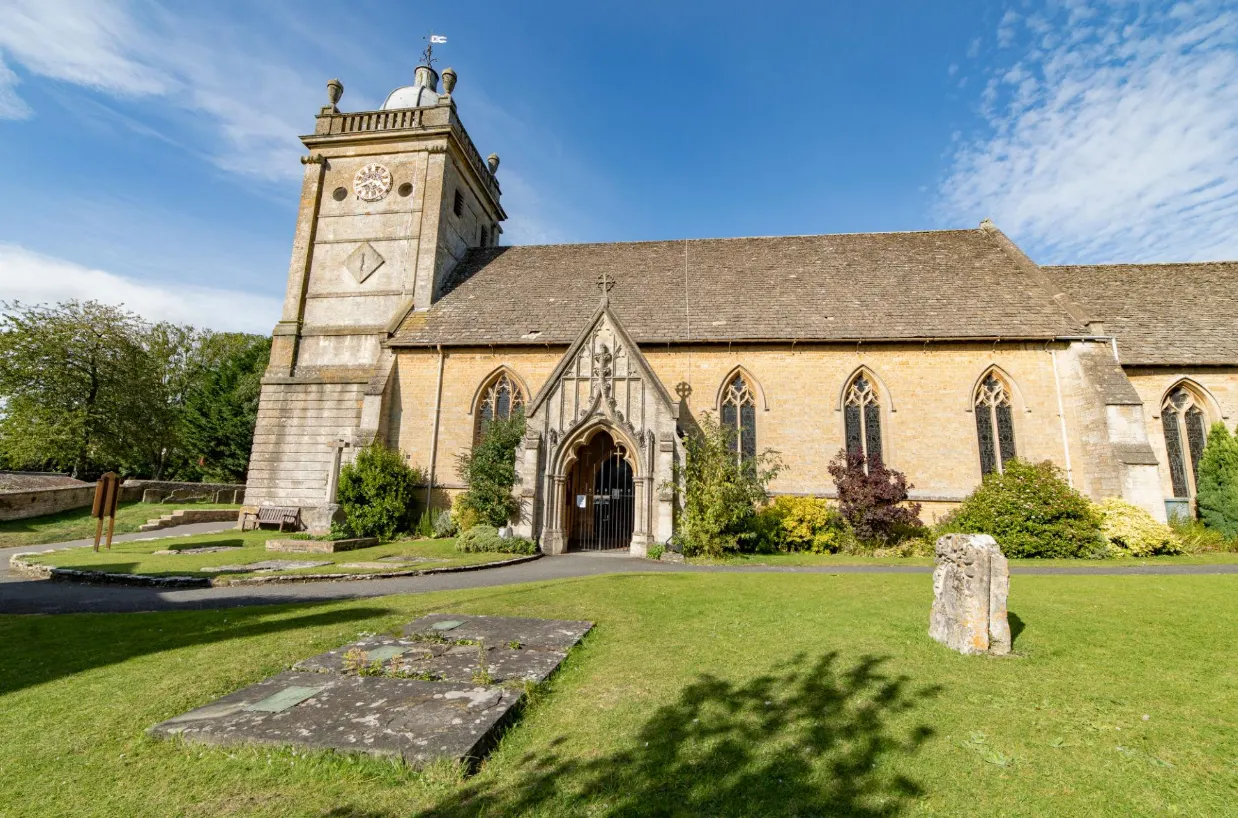
A Little Faith, a Lot of History and Some Wonderful Stories: Discovering the Churches of Bourton-on-the-Water
Away from the riverside photographs and busy tea rooms lies a fascinating history, much of it preserved in the village's churches. St Lawrence's, the Baptists, Benjamin Beddome and a little trip up the hill to Clapton.
 Sarah10 min read
There are some places in the Cotswolds that seem to have been designed to make you slow down, take a deep breath and forget, just for a little while, about the rather hectic world outside. Bourton-on-the-Water is undoubtedly one of them.
With its pretty stone cottages, little bridges crossing the River Windrush and rather lovely places to stop for a coffee, it is hardly surprising that visitors travel from all over the world to see it. And who could blame them? It is a very pretty place indeed.
But there is another side to Bourton that is perhaps less obvious to the casual visitor. Away from the riverside photographs and busy tea rooms lies a fascinating history, much of it preserved in the village’s churches.
I’ve always thought that churches are rather like old friends. They have seen generations come and go, witnessed weddings, funerals, celebrations and disagreements, and quietly watched the world change around them. They rarely tell you everything at once, either. Sometimes you have to look a little closer.
So, shall we take a wander?
St Lawrence’s: More than a thousand years of history
Just a short walk from the High Street stands St Lawrence’s Church, one of Bourton’s most important historic buildings. Its rather distinctive tower, with its elegant dome, is not quite what you might expect to find in a traditional Cotswold village. It has a character all of its own.
The story of Christian worship in Bourton goes back a very long way. In 708 AD, King Cenred of Mercia granted land to the Abbey of Evesham, with the understanding that monks would be sent out to preach Christianity. A modest wooden church had been established in Bourton by 709 AD.
By the time of the Domesday survey in 1086, Bourton had its own priest, a permanent church and 60 acres of glebe land. Not bad for a village that many people today know principally for its pretty bridges and rather irresistible cream teas!
The oldest surviving part of today’s church is the chancel, traditionally dated to 1328 and associated with an early benefactor named Walter de Burhton.
It is worth remembering that this was a very different world. There were no cars, no railway, no village gift shops and certainly no coach parties arriving for an afternoon’s sightseeing. Yet the church was already at the centre of village life.
A church with several personalities
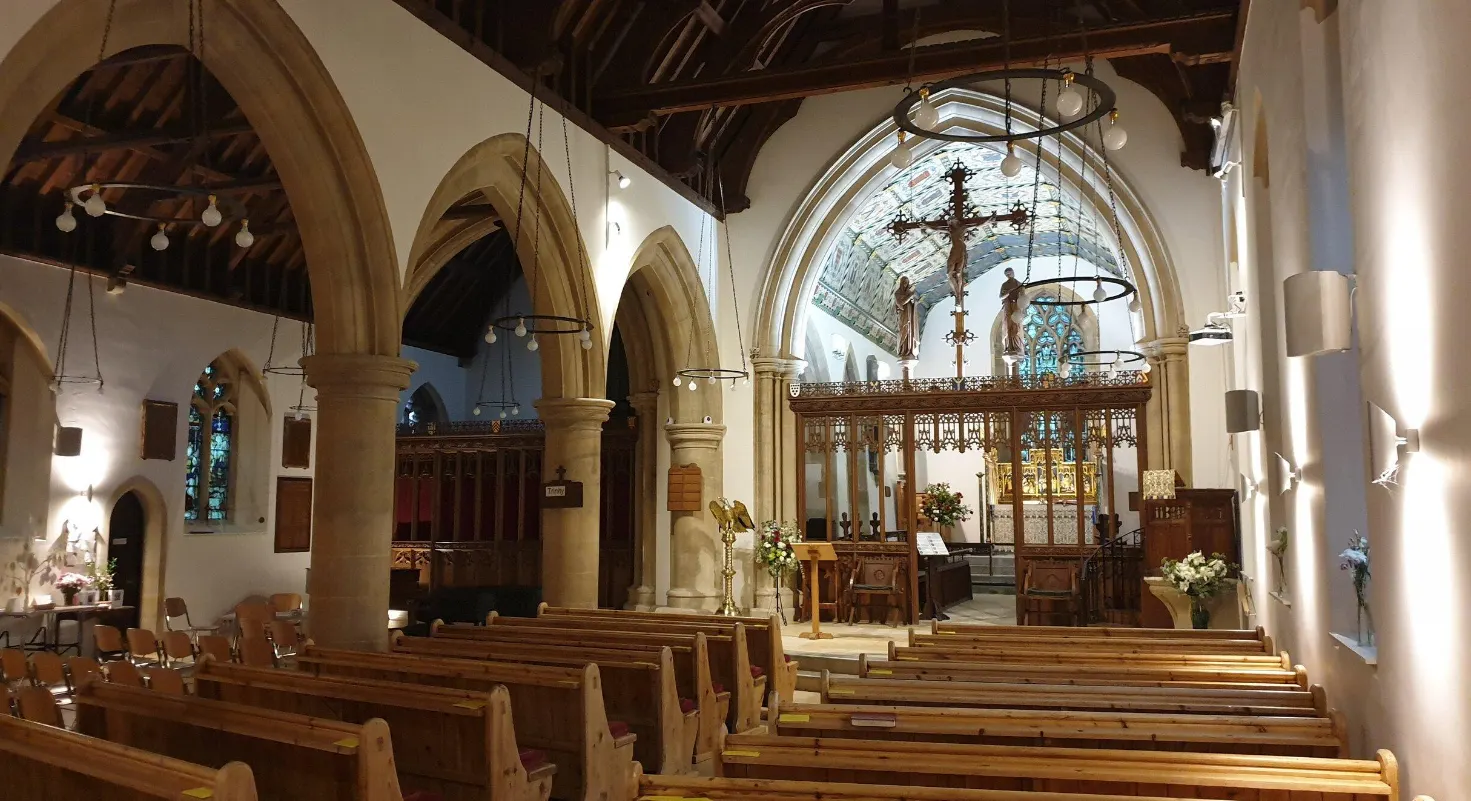
One of the most interesting things about St Lawrence’s is that it has not remained unchanged over the centuries.
In 1784, the church was substantially rebuilt, with the exception of the medieval chancel. The resulting building reflected the fashionable architectural tastes of the Georgian period.
Then came another transformation. During the Victorian period, the church underwent further substantial alterations, including the north aisle and the remodelling of the nave in 1891.
The result is a rather lovely architectural mixture. The tower is Georgian, the chancel medieval and much of the nave Victorian.
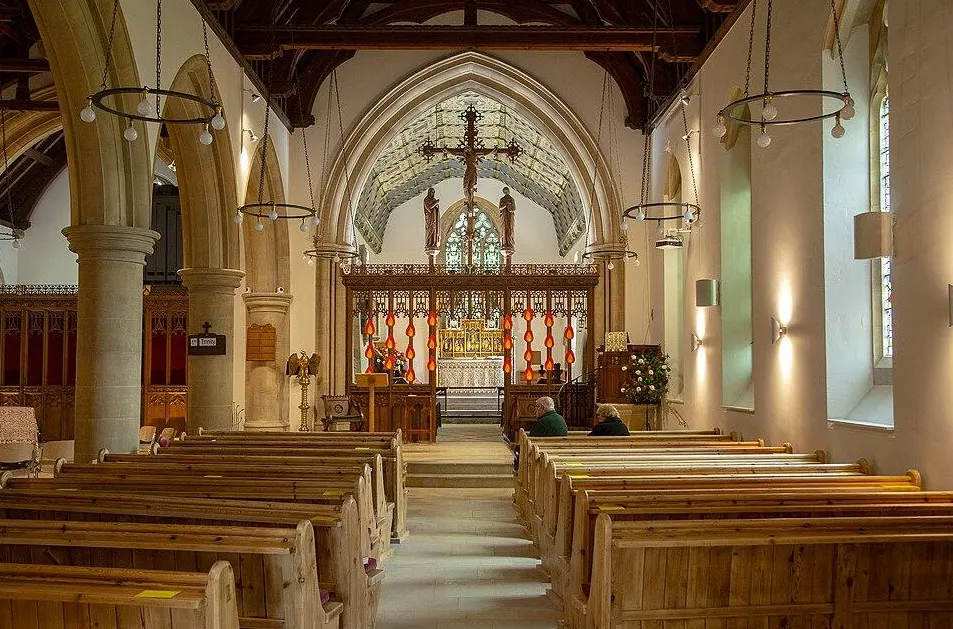
If you visit, do take a moment to look upwards. The church has an impressive roof, and its interior contains some fascinating historical details.
The chancel also carries heraldic shields recalling historic patrons of the parish, including Evesham Abbey, Lord Chandos, Elizabeth I and Wadham College, Oxford.
It is rather remarkable to think of all the different people and institutions that have played a part in looking after this building.
A little mystery beneath our feet
There is another feature of St Lawrence’s that deserves further investigation: its crypt.
The church’s earlier history includes references to an ancient crypt beneath the sanctuary, thought to date from around the twelfth century. It is associated with the possibility of an earlier reliquary chapel.
There is also a local story about a passage connecting the church with the Old Manor House across the High Street, a building associated with the former Abbey of Evesham.
Now, I do love a good local mystery, particularly one involving an old Cotswold building. However, the existence of this passage has not been independently established.
Another little detail to look out for is the skull and crossbones carving above a doorway to the church tower. It is certainly not something you see every day on a pleasant village stroll!
The Baptists and a rather remarkable gentleman called Benjamin
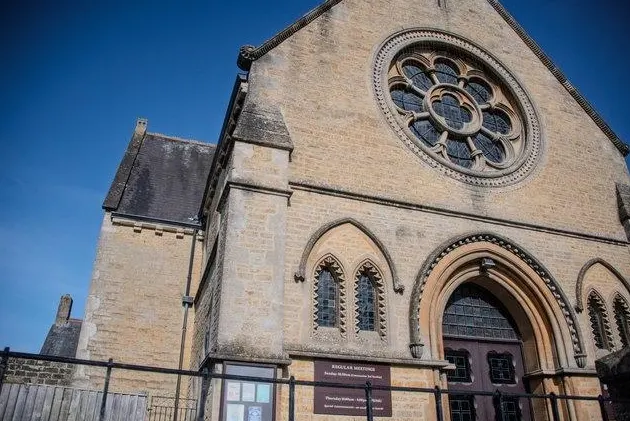
Of course, the history of religion in Bourton does not begin and end with the Church of England.
Bourton has a particularly interesting nonconformist history, and the Baptist congregation dates back to around the 1650s.
The congregation eventually established its own Meeting House in 1701. But it is the story of one particular minister that I find especially appealing.
His name was Benjamin Beddome, and he arrived in Bourton in 1740, aged just 23.
Beddome went on to serve the Baptist congregation for 55 years. He was a respected preacher and a prolific hymn writer, composing hundreds of hymns during his lifetime.
But here is the detail I rather like.
His congregation thought so highly of him that they began raising money to build him a new home. They collected £217, a considerable amount of money in those days, and built him a handsome house.
When he married Elizabeth Boswell in 1749, he moved into the property.
That house is now the Old Manse Hotel, right in the heart of Bourton.
Imagine that! A building that once provided a home for one of the village’s most celebrated religious figures now welcomes visitors looking for a comfortable place to stay.
Beddome remained in Bourton until his death in 1795, having devoted more than half a century to his congregation.
The present Baptist church was built in 1875, continuing a religious tradition that has been part of Bourton for well over three centuries.
A little trip up the hill to St James’s
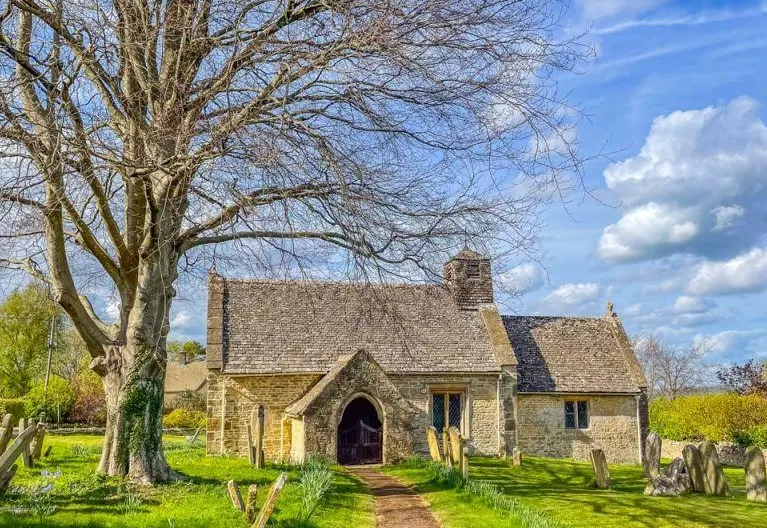
If you have a little more time, I would thoroughly recommend venturing beyond Bourton itself to Clapton-on-the-Hill.
It is a small and rather charming Cotswold village, and its church, dedicated to St James, is well worth discovering.
St James has Norman architectural features, including its south doorway, font and chancel arch. The north side of the chancel arch also contains a Latin inscription in medieval lettering.
There is a lovely connection between St James and St Lawrence’s, too.
In the seventeenth century, when Clapton’s church had fallen into disrepair, worshippers from the village used a chapel within St Lawrence’s, known as the Clapton Aisle.
This arrangement continued until St James was rebuilt in 1670.
I rather like this little piece of local history. It reminds us that village communities were once much more closely connected through their churches than we might imagine today.
The stories that make a village
There is something rather special about these old churches. They are not simply architectural attractions or buildings to admire from the outside. They are part of the living history of the Cotswolds.
They have witnessed centuries of changing fashions, religious beliefs, family histories and village traditions. They have provided comfort in difficult times and a place to celebrate life’s happiest occasions.
And although we often admire the beautiful stonework, the old windows and the impressive towers, it is really the people behind them who make their stories so interesting.
So next time you find yourself in Bourton-on-the-Water, perhaps leave a little time for something different.
Wander away from the river, take a look inside St Lawrence’s, discover the Baptist church and, if the mood takes you, enjoy a little drive up to Clapton.
You might find that the most interesting things about Bourton are not always the ones that appear in the postcards.
And if you discover anything particularly interesting along the way, do tell me. I am always rather partial to a good Cotswold story.
Share this story
More from Village Life
From Bourton to the Battlefields: Lives Lost in Two World Wars
Behind Bourton's picturesque bridges and peaceful green lies another story. It is a story of extraordinary courage, personal sacrifice and families who experienced the terrible consequences of two world wars.
Read From Bourton to the Battlefields: Lives Lost in Two World WarsThe Five Bridges of Bourton-on-the-Water: 2,000 Years of Cotswolds History
Our oldest surviving village-centre bridge was built when Oliver Cromwell ruled England. Our youngest commemorates the coronation of Queen Elizabeth II. And the story goes back much further still.
Read The Five Bridges of Bourton-on-the-Water: 2,000 Years of Cotswolds History